Measurement
How radon testing works
Radon is invisible, odourless and tasteless, so the only way to know what is in a building is to measure it. A test costs a small fraction of a fix, and it is the step that decides whether a fix is needed at all.
The number that matters is picocuries per litre of air, written pCi/L. The EPA recommends fixing a home at or above 4 pCi/L, and suggests considering a fix between 2 and 4. Outdoor air averages roughly 0.4 pCi/L, so no result comes back at zero.
Two kinds of test
Short-term and long-term
2 to 7 days
Short-term test
A charcoal canister, alpha-track detector, electret ion chamber or liquid scintillation device sits in place for a few days, then goes to a lab. It is the fastest way to find out roughly where a house stands, and it is what real estate transactions almost always use because they cannot wait 90 days.
The weakness is that a few days in February and a few days in July can differ substantially in the same house. A short-term test tells you about the days it ran.
More than 90 days
Long-term test
An alpha-track or electret detector stays in place for more than 90 days, often a full year. Because it integrates across seasons, it gives a much better estimate of the annual average exposure - which is the quantity the health risk actually depends on.
If a short-term result comes back near the action level and nobody is buying or selling the house, a long-term test is the better basis for a decision.
Doing it right
Where the detector goes, and what has to be closed
Placement
- The lowest level of the home you live in, or plan to live in. A finished basement counts; an unused crawlspace does not.
- At least 20 inches above the floor, and at least 3 feet from exterior walls, windows and doors.
- Away from drafts, direct heat, direct sunlight and high humidity.
- Not in a kitchen, bathroom or laundry - humidity and fans both distort the reading.
Closed-house conditions
- Begin 12 hours before a short-term test starts, and hold throughout it.
- Windows and exterior doors closed, except for normal entry and exit.
- Whole-house fans and window air conditioners off.
- Normal furnace and central air conditioning operation is fine, and so is a fireplace in normal use.
- Long-term tests do not require closed-house conditions, because they average across normal living.
Reading the result
What the number means
The EPA recommends fixing the home. Confirm with a second short-term test or a long-term test first, unless the result is very high.
The EPA suggests considering a fix. Many mitigation systems bring a home in this range below 2 pCi/L.
No action recommended. Retest every two years, and after any work that changes the foundation or the ventilation.
There is no level of radon considered risk-free. The action level is where the EPA judges that reduction becomes clearly worth doing, not a line between safe and unsafe. A home at 3 pCi/L still carries measurable risk, particularly for anyone in it who smokes.
Protocol and action levels from EPA guidance for radon measurement in homes. Detector types and placement rules follow the EPA Consumer’s Guide to Radon Reduction and the ANSI/AARST measurement standards.
Equipment
Test kits and monitors
Any kit from a lab that reports in pCi/L will answer the question. What matters far more than which one you buy is placing it correctly and holding closed-house conditions while it runs.
Short-term radon test kits
Affiliate linksCharcoal or alpha-track kits that sit in the lowest lived-in level for 2 to 7 days, then go to a lab. Lab fee is usually included in the price.
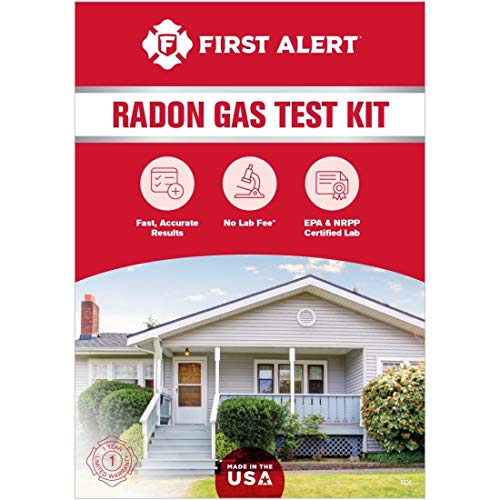
First Alert
First Alert Radon Gas Test Kit, RD1

PRO-LAB
Radon Test Kit for Home, EPA Approved Short Term Radon Detector (1 Kit)

PRO-LAB
PRO-LAB Radon Test Kit for Home - EPA Approved Short-Term Radon Tester with 2 Detectors - 20 Lab Fee Required Per Detector - Quick & Reliable Radon Testing

LABPRO
LABPRO Short-Term Radon Test Kit for Home, EPA Certified Radon Detection - Includes 1 Detector for Quick Radon Assessment - Lab Analysis & Return Mailer Included - Prompt & Dependable Radon Testing
Prices retrieved from Amazon on 2026-08-21 and may since have changed; the price on Amazon at the time of purchase is the one that applies. As an Amazon Associate we earn from qualifying purchases, at no extra cost to you. No manufacturer pays for a place in this list.
Continuous radon monitors
Affiliate linksElectronic monitors that read continuously rather than once. Useful after mitigation, when a system's fan can fail silently.

Airthings
Airthings Corentium Home Radon Detector 223 Portable, Lightweight, Easy-to-Use, (3) AAA Battery Operated, USA Version, pCi/L

AEGTEST
AEGTEST HOUND-1011S Portable Radon Detector, High-Accuracy Sensor for Home, Lightweight, Audible & Visual Alarms, Long-Term Monitoring, Easy-to-Use Radon Tester in pCi/L or Bq/m³ for Basement

Airthings
Airthings 325 Corentium Home 2 Smart Digital Radon Detector - Portable and Easy-to-use Radon Testing with Bluetooth connectivity and Humidity & Temperature Sensors

AEGTEST
AEGTEST HOUND-1011S Portable Radon Detector, High-Accuracy Sensor for Home, Lightweight, Audible & Visual Alarms, Long-Term Monitoring, Easy-to-Use Radon Tester in pCi/L or Bq/m³ for Basement
Prices retrieved from Amazon on 2026-08-21 and may since have changed; the price on Amazon at the time of purchase is the one that applies. As an Amazon Associate we earn from qualifying purchases, at no extra cost to you. No manufacturer pays for a place in this list.
Questions
Common questions about testing
How long does a radon test take?
A short-term test runs 2 to 7 days, then goes to a lab, so a result usually arrives within two weeks of starting. A long-term test runs more than 90 days and gives a better estimate of the annual average.
Where should the detector go?
In the lowest level of the home you live in or plan to live in, at least 20 inches above the floor, away from exterior walls, drafts, heat and humidity. Not in a kitchen, bathroom, laundry or crawlspace.
What are closed-house conditions?
Windows and exterior doors stay closed except for normal entry and exit, starting 12 hours before a short-term test and lasting throughout it. Whole-house fans and window air conditioners stay off. Normal heating and central air conditioning are fine.
My result was 3.8 pCi/L. Do I need to fix it?
The EPA recommends fixing at or above 4 pCi/L and suggests considering a fix between 2 and 4 pCi/L. A single short-term result near the action level is worth confirming with a long-term test before deciding, because radon varies a great deal by season and weather.
How often should I retest?
The EPA suggests retesting every two years, and also after any major renovation, after a change to the heating or ventilation system, after finishing a basement, and if you start occupying a lower level of the house.
Next
If the result comes back high
A confirmed result at or above 4 pCi/L means the house needs a radon reduction system. The technique, the cost and what a good installation looks like are on the mitigation page.
How radon mitigation works →Look up your county’s radon zone →