Radon in Nemaha County
Kansas · FIPS 20131 · 10,114 residents
Predicted average indoor screening level greater than 4 pCi/L
The EPA places Nemaha County in Radon Zone 1, the highest of its three radon potential categories. Counties in this zone have a predicted average indoor radon screening level greater than 4 pCi/L. That is above the level at which the EPA recommends fixing a home.
65 of Kansas’s 105 counties share this zone. The zone describes the county, not your house. Homes above the action level turn up in all three zones, which is why the EPA recommends testing everywhere.
At a glance
Nemaha by the numbers
Prevalence estimates are CDC PLACES model-based estimates from the 2023 Behavioral Risk Factor Surveillance System, 2025 release. They are modelled estimates for the county population, not counts of diagnosed people.
Why the zone matters
Radon is the second leading cause of lung cancer
Radon is a colourless, odourless radioactive gas produced by uranium decaying in soil and rock. It seeps into buildings through foundation cracks, sump openings and gaps around service pipes, and it accumulates indoors. The EPA attributes about 21,000 lung cancer deaths a year in the United States to radon, which makes it the leading cause among people who have never smoked and the second leading cause overall.
Radon and smoking multiply rather than add. The EPA estimates that a smoker exposed to 4 pCi/L faces several times the risk a non-smoker at the same level does, which is why the smoking rate below sits next to the radon zone rather than on a separate page.
34.7 deaths per 100,000 per year, age-adjusted, 2019-2023, below the median US county.
7.6% of adults, against a national county median around 7%.
14.7% of adults currently smoke cigarettes.
Among the 63 Kansas counties with a reported rate, Nemaha has the 45th highest lung cancer death rate at 34.7 per 100,000 (about 6 deaths a year), and the rate is stable.
Lung and bronchus death rates are age-adjusted to the 2000 US standard population, 2019-2023, from the NCI State Cancer Profiles. Rates describe a population over five years and say nothing about any individual. Lung.com publishes environmental and public-health data. It is not medical advice, diagnosis or treatment, and it is not a substitute for a clinician.
What to do
Testing comes first, always
A zone is a prediction for a county. The only way to know what is in a particular building is to measure it, and testing costs a small fraction of what fixing costs.
Short-term test
A kit sits in the lowest lived-in level for two to seven days under closed-house conditions, then goes to a lab. The quickest way to find out where you stand.
Confirm the result
Radon varies by season and weather. A long-term test of more than 90 days, or a second short-term test, tells you whether a high first reading was typical.
Fix at 4 pCi/L or above
The EPA recommends fixing at or above 4 pCi/L and considering a fix between 2 and 4. A mitigation system vents soil gas from beneath the slab to outside.
Test kits
Affiliate linksA short-term kit is the cheapest way to find out what Nemaha County's zone means for your particular building. Lab analysis is usually included in the price.
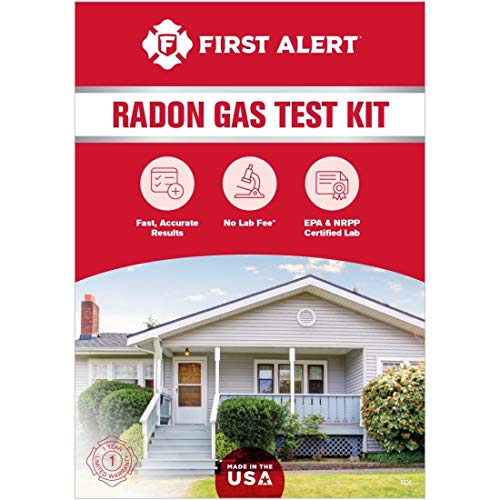
First Alert
First Alert Radon Gas Test Kit, RD1

PRO-LAB
Radon Test Kit for Home, EPA Approved Short Term Radon Detector (1 Kit)

PRO-LAB
PRO-LAB Radon Test Kit for Home - EPA Approved Short-Term Radon Tester with 2 Detectors - 20 Lab Fee Required Per Detector - Quick & Reliable Radon Testing

LABPRO
LABPRO Short-Term Radon Test Kit for Home, EPA Certified Radon Detection - Includes 1 Detector for Quick Radon Assessment - Lab Analysis & Return Mailer Included - Prompt & Dependable Radon Testing
Prices retrieved from Amazon on 2026-08-21 and may since have changed; the price on Amazon at the time of purchase is the one that applies. As an Amazon Associate we earn from qualifying purchases, at no extra cost to you. No manufacturer pays for a place in this list.
Questions
Radon in Nemaha, answered
Is radon a problem in Nemaha County?
Nemaha County is in EPA Radon Zone 1. The EPA predicts an average indoor radon screening level greater than 4 pCi/L for counties in this zone. Zone 1 is the highest of the three categories, and the EPA recommends every home in these counties be tested. A county zone does not predict any individual home's level.
What radon level is considered too high?
The EPA action level is 4 picocuries per litre (pCi/L). At or above 4 pCi/L the EPA recommends fixing the home. The EPA also suggests considering a fix between 2 and 4 pCi/L. There is no level of radon considered risk-free.
How much does radon mitigation cost in Kansas?
The EPA puts the cost of a radon reduction system at roughly $800 to $2,500, with $1,200 a common figure, depending on the house's foundation and the design of system it needs. A short-term test kit costs far less, and testing always comes first.
How do I test for radon in Nemaha County?
Short-term test kits sit in the lowest lived-in level of the home for two to seven days under closed-house conditions, then go to a lab. Long-term tests run more than 90 days and give a better picture of the annual average. Many state radon programmes offer free or discounted kits.
Nearby
Counties bordering Nemaha
Elsewhere in the state
Nemaha within Kansas
Kansas has 105 counties: 65 in Zone 1, 40 in Zone 2 and 0 in Zone 3. Radon potential follows the bedrock rather than the county line, so neighbouring counties frequently share a zone and occasionally do not.
Nemaha County